
Original: $4.49
-65%$4.49
$1.57The Story
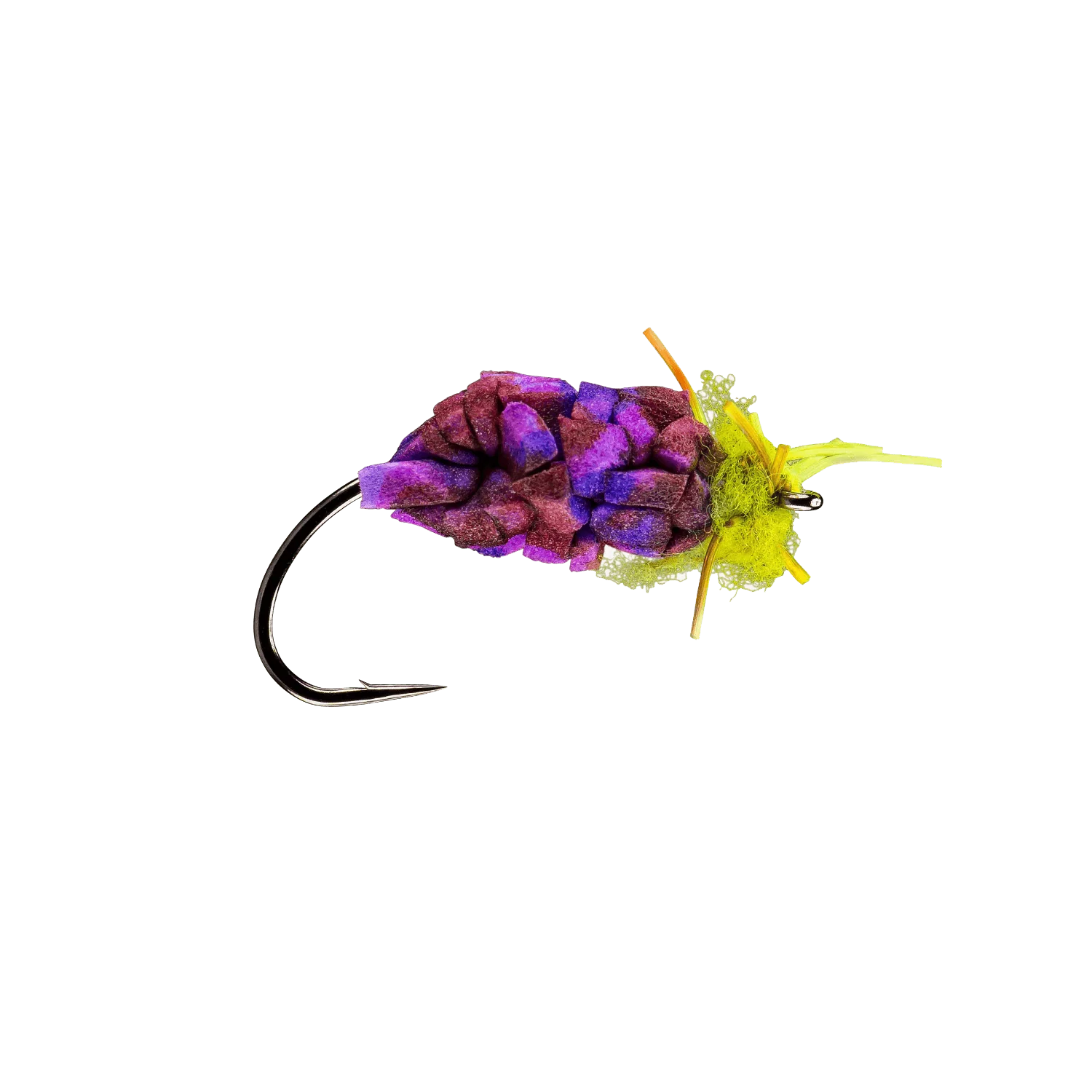
The Mulberry Fly is a specialized pattern designed to catch carp during a specific time of year. It looks just like the berries that fall from trees and land in the water. Carp love these sweet treats and will often ignore other food to eat them. This fly is a must-have in your box if you plan to fish for carp during the summer months.
What It Imitates
This pattern imitates a ripe mulberry fruit. It matches the size, shape, and color of the real berries that grow on trees along riverbanks. The material absorbs water to help it sink slowly like a natural piece of fruit.
How To Use It
You should fish this fly with a technique often called the "plop and drop." Cast the fly so it hits the water with a noticeable splash near a feeding carp. The sound of the fly hitting the surface alerts the fish that food has arrived. Allow the fly to sink slowly without adding any movement. Carp will often rush over to investigate the sound and eat the fly as it drops.
When To Use It
Use this fly in the late spring and summer when mulberry trees are dropping their fruit. It works best on sunny days when the heat causes berries to fall, or on windy days that shake the fruit loose. Look for trees overhanging the water and cast directly under the branches.
Why We Like It
We like this fly because it takes advantage of a unique feeding habit. It is simple but works very well when carp are focused on fruit. The purple color is a perfect match for a ripe berry, and the chenille body feels soft in the fish's mouth.
Comparisons
Mulberry Fly vs. Foam Mulberry
The Mulberry Fly is made of chenille, while the Foam Mulberry is made of floating foam. The Foam Mulberry stays on the surface, which is great for fish feeding on top. However, the chenille Mulberry Fly sinks slowly. This sinking action is often better for spooky fish that prefer to eat just below the surface.
Mulberry Fly vs. Barry's Carp Bitter
The Mulberry Fly imitates a piece of fruit, while Barry's Carp Bitter imitates a small crawfish or nymph. You should use the Carp Bitter when you are searching for fish on the bottom in open water. Switch to the Mulberry Fly when you find carp feeding actively under overhanging trees during the berry season.
Mulberry Fly vs. San Juan Worm
The Mulberry Fly mimics a specific food source, while the San Juan Worm is a general attractor. The worm works year-round in many different types of water. The Mulberry Fly is a seasonal specialist. It works much better than the worm during the few weeks when berries are falling, but the worm is a better choice for the rest of the year.
Details & Craftsmanship
Every detail has been carefully considered to bring you the perfect product.
Description
The Mulberry Fly is a specialized pattern designed to catch carp during a specific time of year. It looks just like the berries that fall from trees and land in the water. Carp love these sweet treats and will often ignore other food to eat them. This fly is a must-have in your box if you plan to fish for carp during the summer months.
What It Imitates
This pattern imitates a ripe mulberry fruit. It matches the size, shape, and color of the real berries that grow on trees along riverbanks. The material absorbs water to help it sink slowly like a natural piece of fruit.
How To Use It
You should fish this fly with a technique often called the "plop and drop." Cast the fly so it hits the water with a noticeable splash near a feeding carp. The sound of the fly hitting the surface alerts the fish that food has arrived. Allow the fly to sink slowly without adding any movement. Carp will often rush over to investigate the sound and eat the fly as it drops.
When To Use It
Use this fly in the late spring and summer when mulberry trees are dropping their fruit. It works best on sunny days when the heat causes berries to fall, or on windy days that shake the fruit loose. Look for trees overhanging the water and cast directly under the branches.
Why We Like It
We like this fly because it takes advantage of a unique feeding habit. It is simple but works very well when carp are focused on fruit. The purple color is a perfect match for a ripe berry, and the chenille body feels soft in the fish's mouth.
Comparisons
Mulberry Fly vs. Foam Mulberry
The Mulberry Fly is made of chenille, while the Foam Mulberry is made of floating foam. The Foam Mulberry stays on the surface, which is great for fish feeding on top. However, the chenille Mulberry Fly sinks slowly. This sinking action is often better for spooky fish that prefer to eat just below the surface.
Mulberry Fly vs. Barry's Carp Bitter
The Mulberry Fly imitates a piece of fruit, while Barry's Carp Bitter imitates a small crawfish or nymph. You should use the Carp Bitter when you are searching for fish on the bottom in open water. Switch to the Mulberry Fly when you find carp feeding actively under overhanging trees during the berry season.
Mulberry Fly vs. San Juan Worm
The Mulberry Fly mimics a specific food source, while the San Juan Worm is a general attractor. The worm works year-round in many different types of water. The Mulberry Fly is a seasonal specialist. It works much better than the worm during the few weeks when berries are falling, but the worm is a better choice for the rest of the year.