Original: $25.99
-65%$25.99
$9.10The Story
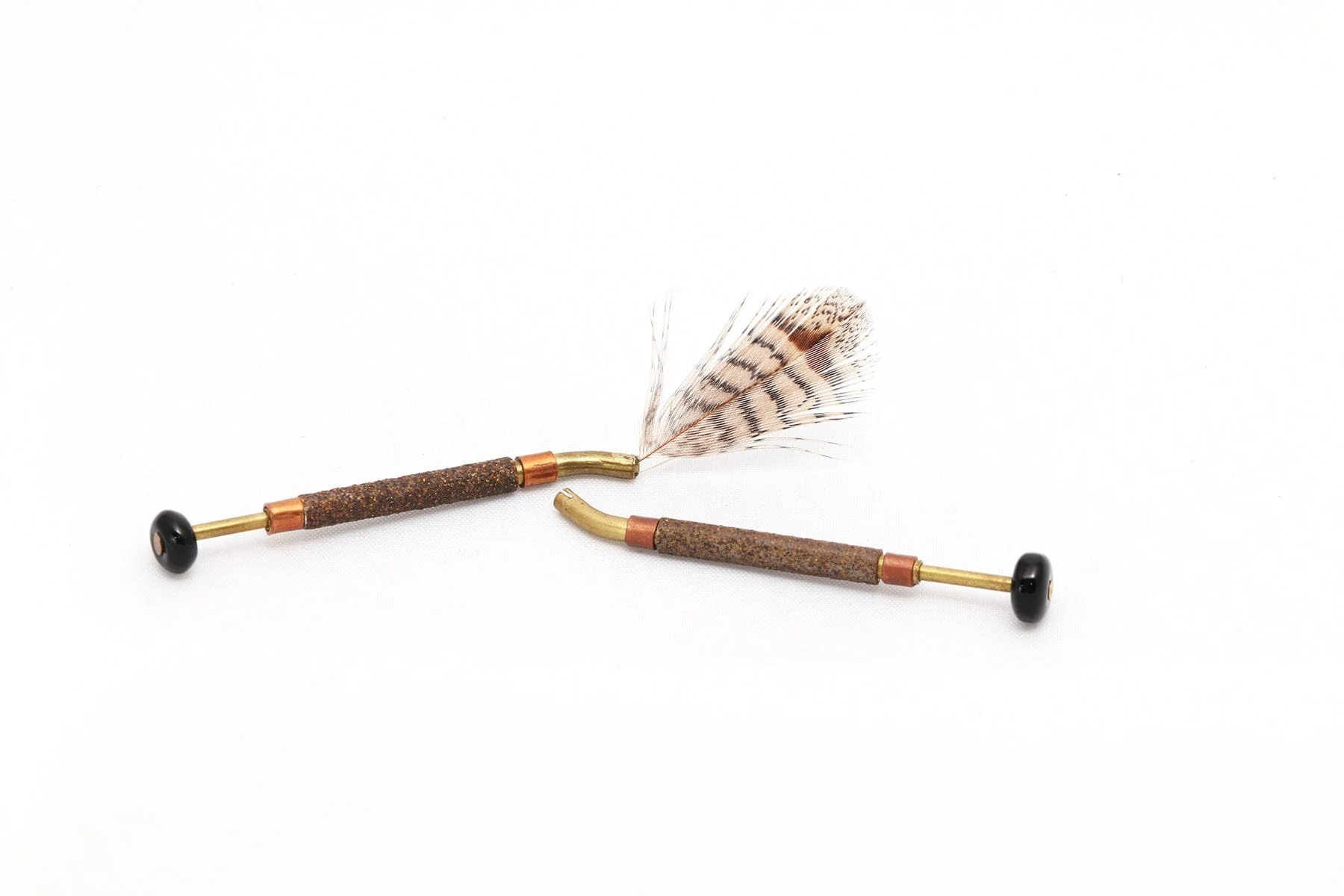
Tyflyz Tools' Rotary Hackle Winder is a compact, rotating hackle plier designed to make palmering and post-wrapping fast, smooth, and consistent. Its free-spinning handle lets you drive wraps with fingertip control while maintaining steady tension, so fragile hackle stems stay intact and spacing stays even. The grippy jaws hold both fine dry-fly hackle and larger wet-fly feathers, giving you one tool for a wide range of patterns.
Because the handle rotates instead of your wrist, it's easier to keep fibers swept in the right direction and avoid accidental crossings. Whether you're winding a long body hackle on streamers or precise, level turns on a parachute post, the winder helps you lay down clean, repeatable wraps that fish and clients notice.
How to Use It
Prep your feather by stripping a few fibers from the base and trimming a short triangle to create a bite point. Clip the tip in the winder, start your hackle with two securing turns, then keep light tension while you either spin the handle for quick, even spacing or guide it around the shank in controlled half-turns. For bodies you’ll rib with wire, palmer the hackle forward, tie it off, then counterwrap the wire through the hackle to lock everything in place.
For parachutes, post your wing (calf, poly, or CDC) and set a thread dam. Grab the hackle with the winder, elevate the handle so the hackle stays perpendicular to the post, then rotate around the post with 5–8 level turns, finishing with a tidy tie-off at the post base. The rotating handle keeps fibers from trapping under the stem and helps prevent stem breakage on fine quills.
Example Flies
Griffith's Gnat: After wrapping a slender peacock herl body, clip a fine grizzly hackle in the winder and palmer 5–7 open turns to the eye. The rotary action keeps the hackle evenly spaced over the herl, so the body doesn't bulk up and the fly rides high on the film. A quick half-spin per turn is all it takes to maintain perfect spacing on size 18–22 hooks.
Woolly Bugger: Tie in a marabou tail and chenille body, then secure your hackle at the tail. Use the winder to palmer the hackle forward in open spirals; counterwrap with wire to bulletproof the fly. The winder's steady tension reduces the chance of snapping larger saddle stems when you stretch them over a fuzzy chenille body.
Parachute Adams: After posting the wing and dubbing a tapered body, grab a medium grizzly or brown hackle in the winder. Rotate around the post with 6–8 snug, level turns, then secure and finish. The rotary handle helps the hackle track level without creeping up or down the post, producing a flatter footprint and better balance in the film.
Stimulator: Use the winder for both the palmered body hackle and the front collar. Palmer a slightly longer, softer hackle through the dubbed abdomen, then switch to a shorter, stiffer hackle for the thorax collar. The tool keeps both sections distinct so the body stays buggy and the collar flares correctly for buoyancy.
Why We Like It
It speeds up repetitive wraps without sacrificing control, which means fewer broken stems and cleaner shoulders on dries. The rotary handle reduces hand strain and keeps fibers oriented as intended, especially on tricky operations like parachute posts and long palmered bodies.
The jaw profile grips a wide range of hackle sizes and can also hold small ribbing materials in a pinch. If you want consistent spacing and tidy tie-offs with minimal fuss, this winder delivers that repeatability across sizes and patterns.
Comparable Tools
Compared to Stonfo's Elite Hackle Pliers, the Tyflyz Tools Rotary Hackle Winder emphasizes a fast, smooth spin and simple, positive grip that's great for long palmering and parachute work. Stonfo's Elite model uses a very secure spring-and-pad jaw that shines with ultra-fine capes on tiny hooks but can feel a bit more deliberate when you want to motor through longer bodies. If your priority is speed and flow on versatile trout patterns, the Tyflyz option feels freer in the hand; if you primarily tie micro dries and value maximum micro-stem security, Stonfo's jaw design has the edge.
Description
Tyflyz Tools' Rotary Hackle Winder is a compact, rotating hackle plier designed to make palmering and post-wrapping fast, smooth, and consistent. Its free-spinning handle lets you drive wraps with fingertip control while maintaining steady tension, so fragile hackle stems stay intact and spacing stays even. The grippy jaws hold both fine dry-fly hackle and larger wet-fly feathers, giving you one tool for a wide range of patterns.
Because the handle rotates instead of your wrist, it's easier to keep fibers swept in the right direction and avoid accidental crossings. Whether you're winding a long body hackle on streamers or precise, level turns on a parachute post, the winder helps you lay down clean, repeatable wraps that fish and clients notice.
How to Use It
Prep your feather by stripping a few fibers from the base and trimming a short triangle to create a bite point. Clip the tip in the winder, start your hackle with two securing turns, then keep light tension while you either spin the handle for quick, even spacing or guide it around the shank in controlled half-turns. For bodies you’ll rib with wire, palmer the hackle forward, tie it off, then counterwrap the wire through the hackle to lock everything in place.
For parachutes, post your wing (calf, poly, or CDC) and set a thread dam. Grab the hackle with the winder, elevate the handle so the hackle stays perpendicular to the post, then rotate around the post with 5–8 level turns, finishing with a tidy tie-off at the post base. The rotating handle keeps fibers from trapping under the stem and helps prevent stem breakage on fine quills.
Example Flies
Griffith's Gnat: After wrapping a slender peacock herl body, clip a fine grizzly hackle in the winder and palmer 5–7 open turns to the eye. The rotary action keeps the hackle evenly spaced over the herl, so the body doesn't bulk up and the fly rides high on the film. A quick half-spin per turn is all it takes to maintain perfect spacing on size 18–22 hooks.
Woolly Bugger: Tie in a marabou tail and chenille body, then secure your hackle at the tail. Use the winder to palmer the hackle forward in open spirals; counterwrap with wire to bulletproof the fly. The winder's steady tension reduces the chance of snapping larger saddle stems when you stretch them over a fuzzy chenille body.
Parachute Adams: After posting the wing and dubbing a tapered body, grab a medium grizzly or brown hackle in the winder. Rotate around the post with 6–8 snug, level turns, then secure and finish. The rotary handle helps the hackle track level without creeping up or down the post, producing a flatter footprint and better balance in the film.
Stimulator: Use the winder for both the palmered body hackle and the front collar. Palmer a slightly longer, softer hackle through the dubbed abdomen, then switch to a shorter, stiffer hackle for the thorax collar. The tool keeps both sections distinct so the body stays buggy and the collar flares correctly for buoyancy.
Why We Like It
It speeds up repetitive wraps without sacrificing control, which means fewer broken stems and cleaner shoulders on dries. The rotary handle reduces hand strain and keeps fibers oriented as intended, especially on tricky operations like parachute posts and long palmered bodies.
The jaw profile grips a wide range of hackle sizes and can also hold small ribbing materials in a pinch. If you want consistent spacing and tidy tie-offs with minimal fuss, this winder delivers that repeatability across sizes and patterns.
Comparable Tools
Compared to Stonfo's Elite Hackle Pliers, the Tyflyz Tools Rotary Hackle Winder emphasizes a fast, smooth spin and simple, positive grip that's great for long palmering and parachute work. Stonfo's Elite model uses a very secure spring-and-pad jaw that shines with ultra-fine capes on tiny hooks but can feel a bit more deliberate when you want to motor through longer bodies. If your priority is speed and flow on versatile trout patterns, the Tyflyz option feels freer in the hand; if you primarily tie micro dries and value maximum micro-stem security, Stonfo's jaw design has the edge.