Original: $549.99
-65%$549.99
$192.50The Story
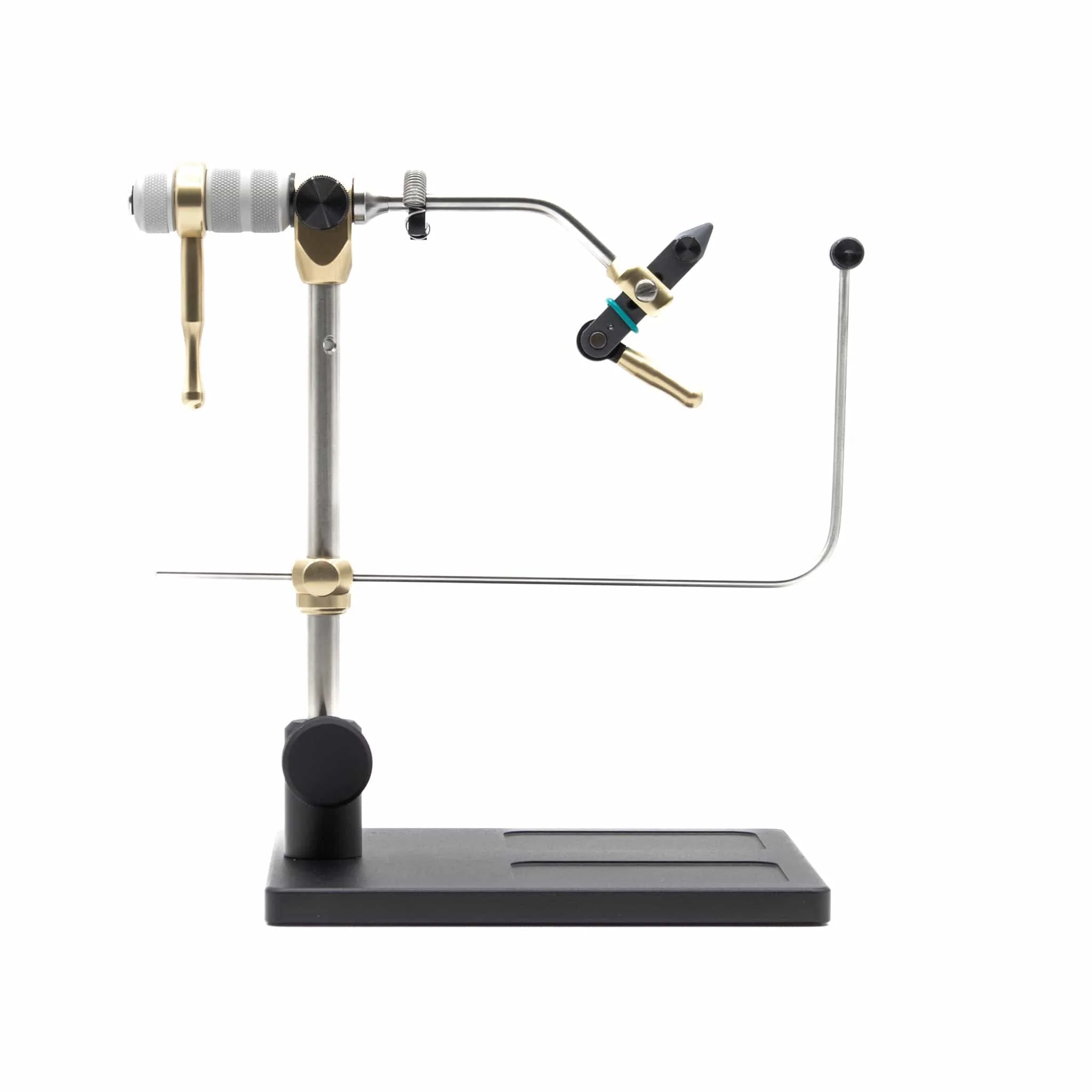
The Renzetti Presentation 4000 Pedestal Base Vise is a true rotary vise built for precision, repeatability, and stability at the bench. With smooth, controllable rotation and finely adjustable cam jaws, it handles everything from tiny midges to larger streamer hooks while keeping the shank perfectly in-line with the axis of rotation. The weighted pedestal base keeps the setup planted on any flat surface, so you can move positions or travel between tying spots without relying on a table edge for clamping.
Made by Renzetti, the Presentation 4000 focuses on ergonomic access around the hook: an open, streamlined head offers generous room for your fingers and tools, while easy-to-reach knobs let you set jaw pressure and rotary resistance precisely. It’s a workhorse vise for serious tiers who want true rotary functionality for cleaner bodies, even ribbing, and fast inspection from all angles.
How to Use It
Seat the pedestal on a stable surface, set stem height to your natural hand position, and align the hook so its shank runs on the vise’s centerline. Lightly close the cam to position the hook, then tighten until it’s immovable without over-stressing the jaws. Dial the rotary tension so the head spins smoothly yet stops where you leave it. If you use a bobbin cradle, adjust it level with the hook shank so thread stays out of the way during rotation. Spin the vise to wrap wire ribs, apply dubbing loops, or inspect proportions without lifting the fly from the jaws.
For small hooks, grip near the jaw tips with lighter cam pressure; for big or heavy-wire hooks, seat deeper in the jaws and increase pressure. When setting dumbbell eyes or coating bodies with resin, rotate the head to keep materials tracking straight and finishes evenly distributed. A quick dry run—clamping a sacrificial hook and doing a full 360-degree spin—helps confirm your alignment and tension before you start tying.
Example Flies
Zebra Midge: On size 20–24 hooks, the Presentation 4000’s true rotary axis keeps your thread and wire rib perfectly parallel to the shank, so wraps stack cleanly without spiraling. Set light jaw pressure at the jaw tips, cradle the bobbin, and rotate the hook to place a fine wire rib over a slim body; the rotation makes counter-ribbing effortless and reduces the chance of nicking thread on tiny barbs.
Parachute Adams: Align the shank on-axis and use the vise’s rotation to taper the body with even dubbing while keeping the post centered. After hackling, a slow spin lets you assess symmetry and density around the post before you lock it down. Rotating to a slight inverted angle also makes it easier to trim tails and tease dubbing without crowding the eye.
Clouser Minnow: When mounting dumbbell eyes, rotate the head to flip the hook and lock the eyes square to the shank with figure-eights. The pedestal’s stability helps when cinching heavy thread on larger hooks, and a touch of drag in the rotary tension keeps the fly from drifting as you align belly and back materials for a straight, keel-down track.
Game Changer: Articulated patterns benefit from a vise that holds each shank solidly while you brush and trim composite bodies. True rotary rotation lets you apply thin resin coats and cure as you turn, preventing sags between segments. The open head gives you room to work around articulation wires and tailing loops without bumping the jaws.
Why We Like It
It offers true rotary performance with intuitive, repeatable adjustments. The rotation is smooth and controllable, the cam jaws hold a wide range of hook sizes with minimal fuss, and the open head design gives excellent access for fingers, scissors, and resin tips. The pedestal base is substantial enough to stay put when tying heavier-wire patterns yet compact enough for most home benches.
Beyond the mechanics, it speeds up clean, consistent tying. Being able to rotate the fly to apply materials and inspect proportions from all sides reduces redo time and helps produce tighter wraps, straighter eyes, and smoother bodies—especially on small midges and long streamers where flaws show quickly.
Comparable Materials
Compared to the Regal Medallion, the Presentation 4000 prioritizes true rotary alignment and fine tension control, while the Regal’s spring jaws excel at ultra-fast hook changes but are not true rotary; if you need rapid production with frequent size changes, Regal is compelling, but for rotational tying and on-axis bodies the Renzetti shines. The Peak Rotary Vise delivers excellent value with robust stainless construction and true rotary action, though its rotation feel and head clearance are a bit bulkier than the P4000’s more refined ergonomics. If you like Renzetti’s approach but want a lighter, more travel-friendly option, the Renzetti Traveler offers similar true rotary function at a lower price with a smaller footprint, trading some refinement and mass of the pedestal for portability.
Description
The Renzetti Presentation 4000 Pedestal Base Vise is a true rotary vise built for precision, repeatability, and stability at the bench. With smooth, controllable rotation and finely adjustable cam jaws, it handles everything from tiny midges to larger streamer hooks while keeping the shank perfectly in-line with the axis of rotation. The weighted pedestal base keeps the setup planted on any flat surface, so you can move positions or travel between tying spots without relying on a table edge for clamping.
Made by Renzetti, the Presentation 4000 focuses on ergonomic access around the hook: an open, streamlined head offers generous room for your fingers and tools, while easy-to-reach knobs let you set jaw pressure and rotary resistance precisely. It’s a workhorse vise for serious tiers who want true rotary functionality for cleaner bodies, even ribbing, and fast inspection from all angles.
How to Use It
Seat the pedestal on a stable surface, set stem height to your natural hand position, and align the hook so its shank runs on the vise’s centerline. Lightly close the cam to position the hook, then tighten until it’s immovable without over-stressing the jaws. Dial the rotary tension so the head spins smoothly yet stops where you leave it. If you use a bobbin cradle, adjust it level with the hook shank so thread stays out of the way during rotation. Spin the vise to wrap wire ribs, apply dubbing loops, or inspect proportions without lifting the fly from the jaws.
For small hooks, grip near the jaw tips with lighter cam pressure; for big or heavy-wire hooks, seat deeper in the jaws and increase pressure. When setting dumbbell eyes or coating bodies with resin, rotate the head to keep materials tracking straight and finishes evenly distributed. A quick dry run—clamping a sacrificial hook and doing a full 360-degree spin—helps confirm your alignment and tension before you start tying.
Example Flies
Zebra Midge: On size 20–24 hooks, the Presentation 4000’s true rotary axis keeps your thread and wire rib perfectly parallel to the shank, so wraps stack cleanly without spiraling. Set light jaw pressure at the jaw tips, cradle the bobbin, and rotate the hook to place a fine wire rib over a slim body; the rotation makes counter-ribbing effortless and reduces the chance of nicking thread on tiny barbs.
Parachute Adams: Align the shank on-axis and use the vise’s rotation to taper the body with even dubbing while keeping the post centered. After hackling, a slow spin lets you assess symmetry and density around the post before you lock it down. Rotating to a slight inverted angle also makes it easier to trim tails and tease dubbing without crowding the eye.
Clouser Minnow: When mounting dumbbell eyes, rotate the head to flip the hook and lock the eyes square to the shank with figure-eights. The pedestal’s stability helps when cinching heavy thread on larger hooks, and a touch of drag in the rotary tension keeps the fly from drifting as you align belly and back materials for a straight, keel-down track.
Game Changer: Articulated patterns benefit from a vise that holds each shank solidly while you brush and trim composite bodies. True rotary rotation lets you apply thin resin coats and cure as you turn, preventing sags between segments. The open head gives you room to work around articulation wires and tailing loops without bumping the jaws.
Why We Like It
It offers true rotary performance with intuitive, repeatable adjustments. The rotation is smooth and controllable, the cam jaws hold a wide range of hook sizes with minimal fuss, and the open head design gives excellent access for fingers, scissors, and resin tips. The pedestal base is substantial enough to stay put when tying heavier-wire patterns yet compact enough for most home benches.
Beyond the mechanics, it speeds up clean, consistent tying. Being able to rotate the fly to apply materials and inspect proportions from all sides reduces redo time and helps produce tighter wraps, straighter eyes, and smoother bodies—especially on small midges and long streamers where flaws show quickly.
Comparable Materials
Compared to the Regal Medallion, the Presentation 4000 prioritizes true rotary alignment and fine tension control, while the Regal’s spring jaws excel at ultra-fast hook changes but are not true rotary; if you need rapid production with frequent size changes, Regal is compelling, but for rotational tying and on-axis bodies the Renzetti shines. The Peak Rotary Vise delivers excellent value with robust stainless construction and true rotary action, though its rotation feel and head clearance are a bit bulkier than the P4000’s more refined ergonomics. If you like Renzetti’s approach but want a lighter, more travel-friendly option, the Renzetti Traveler offers similar true rotary function at a lower price with a smaller footprint, trading some refinement and mass of the pedestal for portability.