Original: $26.99
-65%$26.99
$9.45The Story
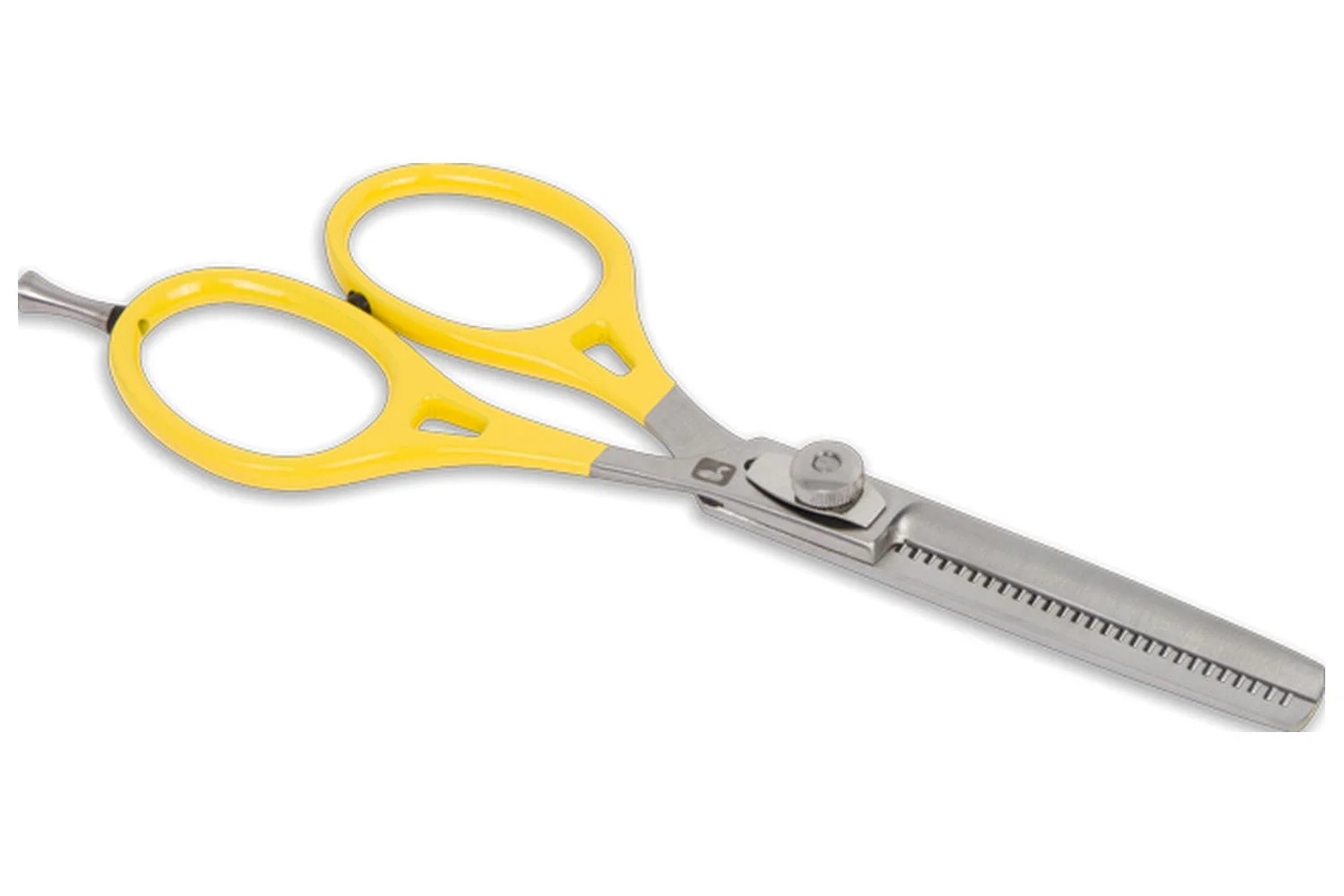
The Loon Ergo Prime Tapering Shears w/ Precision Peg are a specialized cutting tool designed for shaping and texturizing materials in fly tying. Unlike standard scissors that make a single, blunt cut, these shears feature one serrated blade and one cutting blade, which removes a small portion of fibers with each closure. This action allows the tyer to gradually sculpt materials like deer hair, wool, and synthetics into perfectly tapered and natural-looking profiles. The design is purpose-built for creating smooth transitions, avoiding the harsh, chopped appearance that can result from using traditional straight-bladed scissors.
Manufactured by Loon, these particular shears are distinguished by their ergonomic, powder-coated handles that provide a comfortable and secure grip, reducing hand fatigue during repetitive trimming tasks. The most notable feature is the adjustable Precision Peg, a small stud that prevents the blades from closing completely. This innovation provides an exceptional level of control, ensuring the tyer cannot accidentally remove too much material in a single snip, which is a common mistake when shaping dense heads on flies like Muddler Minnows or Dahlberg Divers. The tension is also easily adjustable to suit the tyer's preference and the material being worked.
Example Flies
Muddler Minnow: This classic streamer is defined by its spun and clipped deer hair head, which is intended to imitate the large head of a sculpin. After spinning and packing the deer hair, the Ergo Prime Tapering Shears are used to carefully sculpt the head into a conical, bullet-like shape. The shears excel at creating a smooth, even taper from the collar back to the eye of the hook, a result that is nearly impossible to achieve with standard scissors and provides the fly with its signature swimming action.
Dahlberg Diver: Similar to the Muddler, this topwater pattern relies on a meticulously shaped deer hair head for its signature "diving" and "gurgling" action. The tapering shears are essential for trimming the top of the head into a rounded shape while cutting the bottom flat. This shaping is critical; the flat bottom allows the fly to plane on the surface, and the angled collar catches water on the strip, causing it to dive. The precision peg prevents accidentally cutting a chunk out of the head, which would ruin the fly's hydrodynamics.
Zoo Cougar: This articulated streamer uses a spun wool head to create a large, water-pushing profile that imitates a sculpin. Tapering shears are the primary tool for shaping the wool, which can be dense and difficult to work with. Tyers use the shears to trim the head into a wide, flattened shape characteristic of a sculpin, blending the fibers together to create a full but streamlined silhouette that moves enticingly in the water.
Gartside's Gurgler: While often tied with a straight-cut piece of foam, advanced versions of the Gurgler benefit from shaping. The tapering shears can be used to bevel the leading edge of the foam lip, allowing it to catch water more effectively and create a more pronounced "pop." They are also used to taper the back end of the foam shell where it meets the tail, creating a more seamless and durable transition between materials.
Mouse Rat: This topwater pattern uses a packed deer hair body to create the buoyant, high-floating silhouette of a mouse. After the deer hair is spun and packed tightly along the hook shank, the tapering shears are indispensable for sculpting the body into a realistic rodent shape. This involves rounding the back, tapering the nose, and creating a generally uniform body that floats correctly and pushes a V-wake on the surface of the water.
How to Use It
Using tapering shears effectively is a process of gradual removal, not single cuts. Begin by using a bodkin or dubbing brush to comb out and fluff the fibers of the material you intend to shape, such as a spun deer hair head. Hold the shears at an angle to the material and make numerous small, quick snips, continually rotating the fly in the vise. Instead of trying to cut to the final shape immediately, work your way in, removing small amounts of material with each pass. This technique, often called "feathering," blends the fibers together and creates a smooth, natural taper without any hard edges.
The Precision Peg is a key component in this process. By preventing the blades from fully closing, it forces you to remove less material with each cut, giving you ultimate control and preventing catastrophic mistakes. For very dense materials, you may make dozens of small cuts around the fly's head, slowly revealing the desired profile. This methodical approach ensures a symmetrical and beautifully shaped fly that not only looks better but also performs correctly in the water.
Why We Like It
We like this tool because it transforms the frustrating task of shaping materials into a controlled and repeatable process. The ability to create perfectly smooth, tapered heads on streamers and bass bugs directly translates to better-looking and more effective flies. The gradual cutting action eliminates the blocky, "home haircut" look that comes from using standard scissors on spun hair or wool, resulting in a professional-quality finish. This level of refinement can be the difference between a fly that swims true and one that spins or looks unnatural in the water.
Specifically, the Loon Ergo Prime Tapering Shears stand out for their thoughtful design. The ergonomic handles are noticeably more comfortable than the simple finger loops on many other tying tools, which makes a significant difference during long sessions shaping multiple deer hair flies. The Precision Peg is a brilliant feature that serves as a safety net, giving tyers the confidence to sculpt dense, expensive materials without fear of ruining the fly with one overzealous snip. This makes the tool equally valuable for beginners learning to shape hair and for experts who demand consistency and precision.
Comparable Tools
The primary alternatives to specialized tapering shears are a very sharp pair of straight-bladed scissors or a double-edged razor blade. High-quality standard scissors can be used to point-cut into a material, but this is a difficult technique to master and rarely produces the same smooth, blended finish. A razor blade is the classic tool for shaping deer hair and can create incredibly smooth profiles, but it offers very little room for error; a single slip of the hand can slice off a large chunk of the head, instantly ruining the fly. Tapering shears offer a far more forgiving method that provides superior control and consistency compared to both of these alternatives. While other brands like Dr. Slick and Umpqua offer their own tapering shears, the Loon Ergo Prime model's combination of ergonomic handles and the unique Precision Peg sets it apart.

Details & Craftsmanship
Every detail has been carefully considered to bring you the perfect product.

Details & Craftsmanship
Every detail has been carefully considered to bring you the perfect product.

Details & Craftsmanship
Every detail has been carefully considered to bring you the perfect product.

Details & Craftsmanship
Every detail has been carefully considered to bring you the perfect product.
Description
The Loon Ergo Prime Tapering Shears w/ Precision Peg are a specialized cutting tool designed for shaping and texturizing materials in fly tying. Unlike standard scissors that make a single, blunt cut, these shears feature one serrated blade and one cutting blade, which removes a small portion of fibers with each closure. This action allows the tyer to gradually sculpt materials like deer hair, wool, and synthetics into perfectly tapered and natural-looking profiles. The design is purpose-built for creating smooth transitions, avoiding the harsh, chopped appearance that can result from using traditional straight-bladed scissors.
Manufactured by Loon, these particular shears are distinguished by their ergonomic, powder-coated handles that provide a comfortable and secure grip, reducing hand fatigue during repetitive trimming tasks. The most notable feature is the adjustable Precision Peg, a small stud that prevents the blades from closing completely. This innovation provides an exceptional level of control, ensuring the tyer cannot accidentally remove too much material in a single snip, which is a common mistake when shaping dense heads on flies like Muddler Minnows or Dahlberg Divers. The tension is also easily adjustable to suit the tyer's preference and the material being worked.
Example Flies
Muddler Minnow: This classic streamer is defined by its spun and clipped deer hair head, which is intended to imitate the large head of a sculpin. After spinning and packing the deer hair, the Ergo Prime Tapering Shears are used to carefully sculpt the head into a conical, bullet-like shape. The shears excel at creating a smooth, even taper from the collar back to the eye of the hook, a result that is nearly impossible to achieve with standard scissors and provides the fly with its signature swimming action.
Dahlberg Diver: Similar to the Muddler, this topwater pattern relies on a meticulously shaped deer hair head for its signature "diving" and "gurgling" action. The tapering shears are essential for trimming the top of the head into a rounded shape while cutting the bottom flat. This shaping is critical; the flat bottom allows the fly to plane on the surface, and the angled collar catches water on the strip, causing it to dive. The precision peg prevents accidentally cutting a chunk out of the head, which would ruin the fly's hydrodynamics.
Zoo Cougar: This articulated streamer uses a spun wool head to create a large, water-pushing profile that imitates a sculpin. Tapering shears are the primary tool for shaping the wool, which can be dense and difficult to work with. Tyers use the shears to trim the head into a wide, flattened shape characteristic of a sculpin, blending the fibers together to create a full but streamlined silhouette that moves enticingly in the water.
Gartside's Gurgler: While often tied with a straight-cut piece of foam, advanced versions of the Gurgler benefit from shaping. The tapering shears can be used to bevel the leading edge of the foam lip, allowing it to catch water more effectively and create a more pronounced "pop." They are also used to taper the back end of the foam shell where it meets the tail, creating a more seamless and durable transition between materials.
Mouse Rat: This topwater pattern uses a packed deer hair body to create the buoyant, high-floating silhouette of a mouse. After the deer hair is spun and packed tightly along the hook shank, the tapering shears are indispensable for sculpting the body into a realistic rodent shape. This involves rounding the back, tapering the nose, and creating a generally uniform body that floats correctly and pushes a V-wake on the surface of the water.
How to Use It
Using tapering shears effectively is a process of gradual removal, not single cuts. Begin by using a bodkin or dubbing brush to comb out and fluff the fibers of the material you intend to shape, such as a spun deer hair head. Hold the shears at an angle to the material and make numerous small, quick snips, continually rotating the fly in the vise. Instead of trying to cut to the final shape immediately, work your way in, removing small amounts of material with each pass. This technique, often called "feathering," blends the fibers together and creates a smooth, natural taper without any hard edges.
The Precision Peg is a key component in this process. By preventing the blades from fully closing, it forces you to remove less material with each cut, giving you ultimate control and preventing catastrophic mistakes. For very dense materials, you may make dozens of small cuts around the fly's head, slowly revealing the desired profile. This methodical approach ensures a symmetrical and beautifully shaped fly that not only looks better but also performs correctly in the water.
Why We Like It
We like this tool because it transforms the frustrating task of shaping materials into a controlled and repeatable process. The ability to create perfectly smooth, tapered heads on streamers and bass bugs directly translates to better-looking and more effective flies. The gradual cutting action eliminates the blocky, "home haircut" look that comes from using standard scissors on spun hair or wool, resulting in a professional-quality finish. This level of refinement can be the difference between a fly that swims true and one that spins or looks unnatural in the water.
Specifically, the Loon Ergo Prime Tapering Shears stand out for their thoughtful design. The ergonomic handles are noticeably more comfortable than the simple finger loops on many other tying tools, which makes a significant difference during long sessions shaping multiple deer hair flies. The Precision Peg is a brilliant feature that serves as a safety net, giving tyers the confidence to sculpt dense, expensive materials without fear of ruining the fly with one overzealous snip. This makes the tool equally valuable for beginners learning to shape hair and for experts who demand consistency and precision.
Comparable Tools
The primary alternatives to specialized tapering shears are a very sharp pair of straight-bladed scissors or a double-edged razor blade. High-quality standard scissors can be used to point-cut into a material, but this is a difficult technique to master and rarely produces the same smooth, blended finish. A razor blade is the classic tool for shaping deer hair and can create incredibly smooth profiles, but it offers very little room for error; a single slip of the hand can slice off a large chunk of the head, instantly ruining the fly. Tapering shears offer a far more forgiving method that provides superior control and consistency compared to both of these alternatives. While other brands like Dr. Slick and Umpqua offer their own tapering shears, the Loon Ergo Prime model's combination of ergonomic handles and the unique Precision Peg sets it apart.