Original: $19.99
-65%$19.99
$7.00The Story
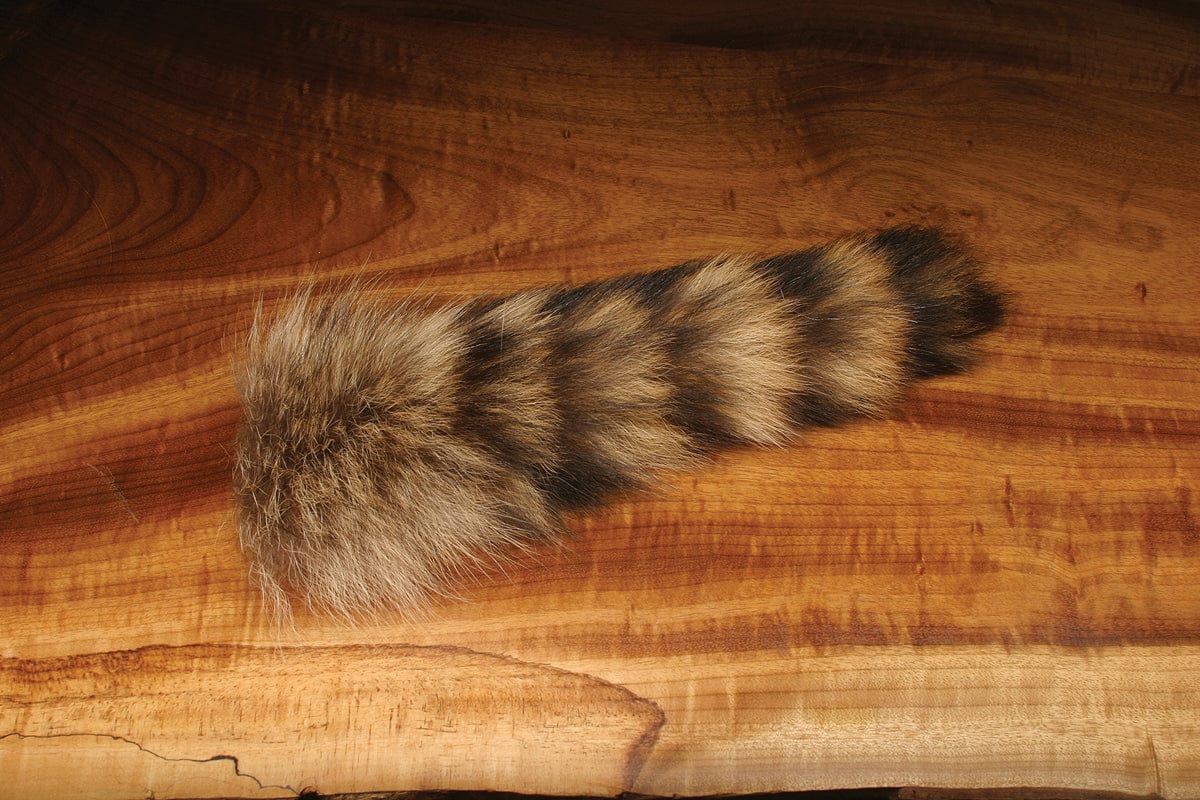
Hareline Complete Raccoon Tail is a full, natural tail section loaded with soft underfur and tapered guard hairs that carry subtle, natural barring. You get multiple textures on one hide: dense, matte underfur for dubbing loops and shoulders; mid-length fibers for collars; and longer, lively tips for wings and tails on steelhead, salmon, and predator flies. The material moves fluidly in cold water, takes dye well, and trims cleanly without excessive bulk.
Because it’s a complete tail from Hareline, you can pick regions of the hide that match the job—base for bulk and loft, mid-tail for support and taper, tip sections for sleek, mobile wings. The fiber length commonly ranges from about 1.5 to 3.5 inches, giving excellent coverage for swing flies and streamers without the collapse you can get from softer, uniform synthetics.
How to Use It
Cut small, square patches from the hide with a razor, then pinch out or comb the short underfur if you want a sleeker tie-in. Tie wings by the tips for a tapered, no-trim finish, or reverse-tie small clumps to build a shoulder that props softer materials. For composite or standard dubbing loops, blend a modest pinch of underfur with select guard hairs and a sprinkle of flash; spin and brush to create a translucent, breathing collar that won’t mat.
To size correctly, match the longest fibers to 1–1.5 times the hook shank for trout streamers and up to 2–2.5 times for steelhead and salmon wings. Keep it sparse—raccoon flares and holds shape, so a little builds profile fast. If you want defined bars in the wing, orient the natural tips outward; if you’re after a uniform silhouette, trim the blunt ends inside the tie-in and stroke fibers rearward before securing.
Example Flies
Intruder: Use a thin composite loop of raccoon underfur and 10–15 guard hairs blended with a few strands of flash to build the rear shoulder. Follow with a contrasting front shoulder of slightly longer raccoon fibers to prop ostrich or marabou. Dyed blue/black or chartreuse/black tail sections add natural barring to the silhouette while keeping the fly mobile in winter flows.
Templedog Tube: Build a layered wing on a 1–1.5 inch tube by first tying a sparse base of raccoon underfur for loft, then a mid wing of longer raccoon tips for taper. Add a few mirror or angel hair strands and top with a darker veil. Natural brown or black wings give a classic salmon profile with more pulse and less water weight than rabbit.
Raccoon Sculpin: Tie a short, barred raccoon tail (olive or tan) and add a composite loop collar of raccoon underfur mixed with olive UV dub to create a dense, breathing head. Pair with lead or tungsten eyes and a mottled body to get a compact baitfish that kicks on the strip yet stalls and breathes on the pause.
Why We Like It
Raccoon tail has a built-in taper and natural barring that make flies look alive with minimal trimming or stacking. The mix of underfur and guard hairs creates both loft and definition, so you can sculpt shoulders that prop softer materials without relying on stiff synthetics. It remains mobile in cold water and resists the lifeless, uniform look that some alternatives produce.
It’s also efficient: one tail yields multiple textures and colors (in the case of natural-dyed variants), spins easily in loops, and blends well with flash or other furs. Compared to bulkier hides, it sheds water quickly, casts cleanly, and builds a strong profile with less material.
Comparable Materials
Finn raccoon (often sold as patches or zonker strips) has longer, silkier fibers and even more flow, great for large salmon and predator profiles; it’s typically pricier and a touch softer. Arctic fox tail runs shorter and finer, perfect for smaller swing flies and subtler collars, but it won’t build the same shoulder as raccoon. Craft fur offers uniform length and color range at a lower cost and sheds water quickly, yet lacks the natural taper and barred realism of raccoon. Silver fox provides length and sheen but is stiffer and can overpower smaller patterns. If you want maximum mobility with built-in taper and bar accents, raccoon tail sits in a sweet spot between fox and synthetics.
Description
Hareline Complete Raccoon Tail is a full, natural tail section loaded with soft underfur and tapered guard hairs that carry subtle, natural barring. You get multiple textures on one hide: dense, matte underfur for dubbing loops and shoulders; mid-length fibers for collars; and longer, lively tips for wings and tails on steelhead, salmon, and predator flies. The material moves fluidly in cold water, takes dye well, and trims cleanly without excessive bulk.
Because it’s a complete tail from Hareline, you can pick regions of the hide that match the job—base for bulk and loft, mid-tail for support and taper, tip sections for sleek, mobile wings. The fiber length commonly ranges from about 1.5 to 3.5 inches, giving excellent coverage for swing flies and streamers without the collapse you can get from softer, uniform synthetics.
How to Use It
Cut small, square patches from the hide with a razor, then pinch out or comb the short underfur if you want a sleeker tie-in. Tie wings by the tips for a tapered, no-trim finish, or reverse-tie small clumps to build a shoulder that props softer materials. For composite or standard dubbing loops, blend a modest pinch of underfur with select guard hairs and a sprinkle of flash; spin and brush to create a translucent, breathing collar that won’t mat.
To size correctly, match the longest fibers to 1–1.5 times the hook shank for trout streamers and up to 2–2.5 times for steelhead and salmon wings. Keep it sparse—raccoon flares and holds shape, so a little builds profile fast. If you want defined bars in the wing, orient the natural tips outward; if you’re after a uniform silhouette, trim the blunt ends inside the tie-in and stroke fibers rearward before securing.
Example Flies
Intruder: Use a thin composite loop of raccoon underfur and 10–15 guard hairs blended with a few strands of flash to build the rear shoulder. Follow with a contrasting front shoulder of slightly longer raccoon fibers to prop ostrich or marabou. Dyed blue/black or chartreuse/black tail sections add natural barring to the silhouette while keeping the fly mobile in winter flows.
Templedog Tube: Build a layered wing on a 1–1.5 inch tube by first tying a sparse base of raccoon underfur for loft, then a mid wing of longer raccoon tips for taper. Add a few mirror or angel hair strands and top with a darker veil. Natural brown or black wings give a classic salmon profile with more pulse and less water weight than rabbit.
Raccoon Sculpin: Tie a short, barred raccoon tail (olive or tan) and add a composite loop collar of raccoon underfur mixed with olive UV dub to create a dense, breathing head. Pair with lead or tungsten eyes and a mottled body to get a compact baitfish that kicks on the strip yet stalls and breathes on the pause.
Why We Like It
Raccoon tail has a built-in taper and natural barring that make flies look alive with minimal trimming or stacking. The mix of underfur and guard hairs creates both loft and definition, so you can sculpt shoulders that prop softer materials without relying on stiff synthetics. It remains mobile in cold water and resists the lifeless, uniform look that some alternatives produce.
It’s also efficient: one tail yields multiple textures and colors (in the case of natural-dyed variants), spins easily in loops, and blends well with flash or other furs. Compared to bulkier hides, it sheds water quickly, casts cleanly, and builds a strong profile with less material.
Comparable Materials
Finn raccoon (often sold as patches or zonker strips) has longer, silkier fibers and even more flow, great for large salmon and predator profiles; it’s typically pricier and a touch softer. Arctic fox tail runs shorter and finer, perfect for smaller swing flies and subtler collars, but it won’t build the same shoulder as raccoon. Craft fur offers uniform length and color range at a lower cost and sheds water quickly, yet lacks the natural taper and barred realism of raccoon. Silver fox provides length and sheen but is stiffer and can overpower smaller patterns. If you want maximum mobility with built-in taper and bar accents, raccoon tail sits in a sweet spot between fox and synthetics.