Original: $9.99
-65%$9.99
$3.50The Story
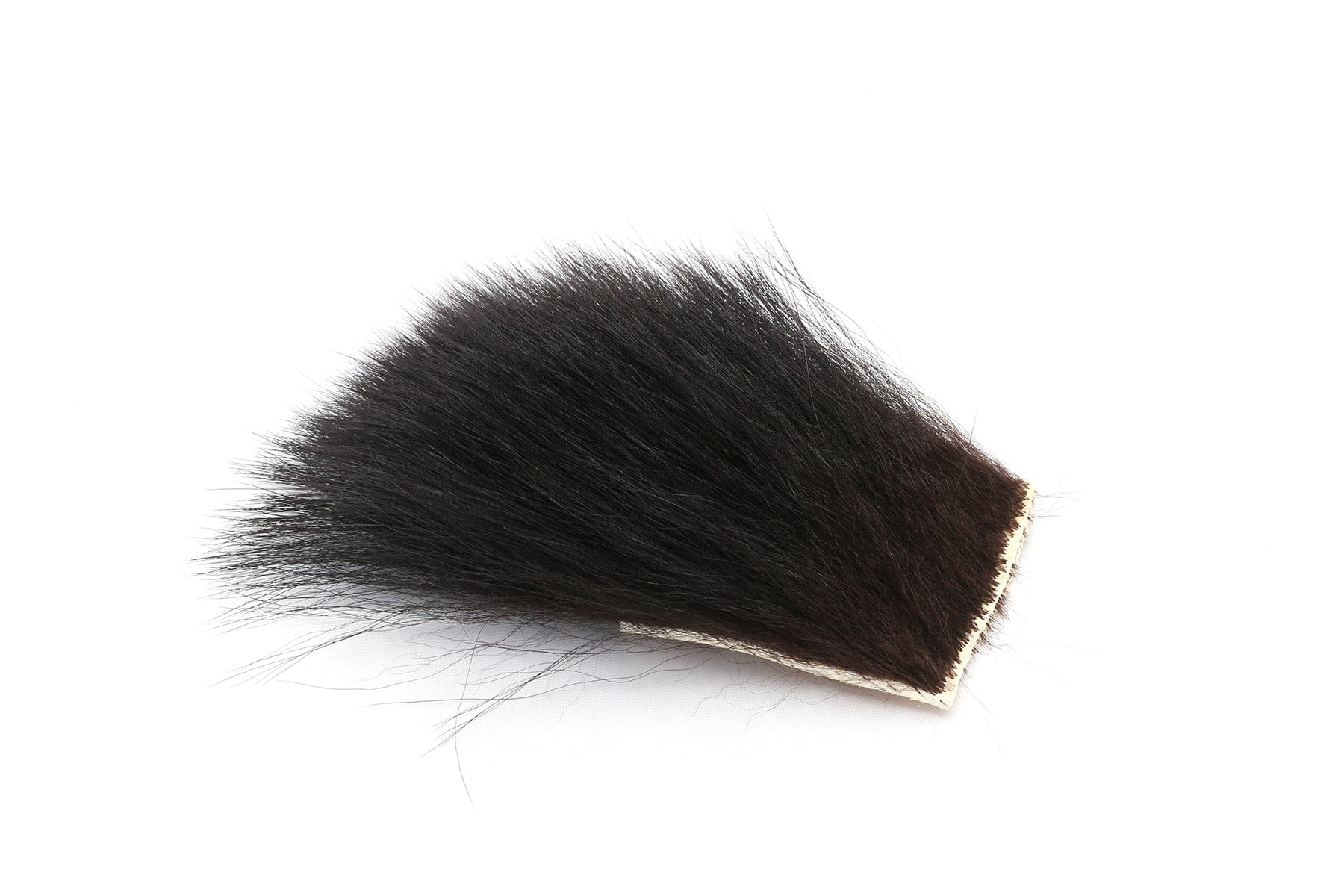
Hareline's Black Bear Hair Piece is a dense, jet-black natural hair patch prized for building sleek, durable hairwings and tails. The guard hairs are straight, moderately stiff, and finely tapered, giving you crisp, pointed tips and a polished silhouette that holds shape in current. Usable fiber lengths typically run in the 2–4 inch range on most patches, with enough consistency to stack and align cleanly.
Compared to hollow deer or bucktail, black bear flares less, sinks faster, and produces a tighter, more traditional hairwing profile—ideal for classic Atlantic salmon and steelhead patterns, as well as low-water flies where a sparse, confident outline outfishes bulk. The patch’s soft, short underfur doubles as a great dubbing for black bodies and butts.
How to Use It
Comb out the underfur, then clip a small clump of guard hair from the hide. Strip remaining fuzz from the butts and lightly stack the tips for a neat, even wing. For hairwings, measure to just past the hook bend, use a soft loop and pinch wrap to seat the bundle on top of the shank, then progressively tighten to minimize flare. Flattened thread or a short thread ramp behind the tie-in point helps the wing sit dead-center; a small drop of head cement at the butts locks it in.
For tails, go sparse and keep the bundle short to resist fouling. For collars, tie the hair in by the tips, fold back, and bind to create a low-profile shoulder that won’t balloon. A couple strands of fine flash blend well with the hair’s natural sheen without overwhelming the wing. Steam or pinch-set the final angle if you want a subtle downwing cant.
Example Flies
Black Bear Green Butt: A low-water staple on size 4–10 salmon or steelhead irons. Start with a short fluorescent green floss butt and fine oval tinsel tag, a slim black dubbed body, and sparse black hackle at the throat. The wing is a neat, stacked bundle of black bear set just beyond the bend. The material’s minimal flare gives the fly its trademark spare profile that fishes superbly in clear, late-season flows.
Thunder & Lightning Hairwing: Tie a bright silver tinsel body ribbed with fine oval, add a hot orange or yellow throat, and finish with a medium-density black bear hair wing. On size 2–8 singles or doubles, the stiff, straight fibers keep the wing narrow over fast water, while the glossy black highlights the color pops in stained or glacial-green rivers.
Low Water Steelhead Hairwing: Keep everything slim—tiny silver tag, a turn or two of peacock herl, and a short, sparse black bear wing with a few strands of mirage flash. On low-wire hooks in sizes 6–10, the bear hair’s stiffness resists collapsing and fouling on long leaders, preserving a crisp silhouette that swings true over spooky fish.
Why We Like It
Black bear hair delivers a refined hairwing: straight fibers, sharp natural tips, and just enough stiffness to keep wings from washing out without feeling lifeless. It compresses predictably under thread, so you can build consistent profiles from tiny low-water wings to fuller winter dressings. The natural luster reads as both matte and slick, offering contrast and a confident outline in a wide range of light conditions.
It’s also durable. Fibers resist breakage and don’t kink easily, so flies hold their shape after fish and repeated swings. The bonus underfur provides authentic black dubbing right off the patch, helping you match wing and body tone without juggling extra materials.
Comparable Materials
Arctic fox tail is softer with more fluid motion but shorter average fibers; it excels for mobile collars and smaller wings, while black bear builds cleaner, narrower hairwings that resist collapse. Bucktail offers longer lengths and buoyancy but flares more and rides higher, better for baitfish streamers than low-water salmon flies. Goat hair (Templedog-style) runs longer with sweeping movement yet can feel too loose without support; bear keeps a tighter silhouette. Craft fur is consistent and inexpensive, but it mats sooner and lacks the nuanced sheen and tapered tips you get from natural bear.
Description
Hareline's Black Bear Hair Piece is a dense, jet-black natural hair patch prized for building sleek, durable hairwings and tails. The guard hairs are straight, moderately stiff, and finely tapered, giving you crisp, pointed tips and a polished silhouette that holds shape in current. Usable fiber lengths typically run in the 2–4 inch range on most patches, with enough consistency to stack and align cleanly.
Compared to hollow deer or bucktail, black bear flares less, sinks faster, and produces a tighter, more traditional hairwing profile—ideal for classic Atlantic salmon and steelhead patterns, as well as low-water flies where a sparse, confident outline outfishes bulk. The patch’s soft, short underfur doubles as a great dubbing for black bodies and butts.
How to Use It
Comb out the underfur, then clip a small clump of guard hair from the hide. Strip remaining fuzz from the butts and lightly stack the tips for a neat, even wing. For hairwings, measure to just past the hook bend, use a soft loop and pinch wrap to seat the bundle on top of the shank, then progressively tighten to minimize flare. Flattened thread or a short thread ramp behind the tie-in point helps the wing sit dead-center; a small drop of head cement at the butts locks it in.
For tails, go sparse and keep the bundle short to resist fouling. For collars, tie the hair in by the tips, fold back, and bind to create a low-profile shoulder that won’t balloon. A couple strands of fine flash blend well with the hair’s natural sheen without overwhelming the wing. Steam or pinch-set the final angle if you want a subtle downwing cant.
Example Flies
Black Bear Green Butt: A low-water staple on size 4–10 salmon or steelhead irons. Start with a short fluorescent green floss butt and fine oval tinsel tag, a slim black dubbed body, and sparse black hackle at the throat. The wing is a neat, stacked bundle of black bear set just beyond the bend. The material’s minimal flare gives the fly its trademark spare profile that fishes superbly in clear, late-season flows.
Thunder & Lightning Hairwing: Tie a bright silver tinsel body ribbed with fine oval, add a hot orange or yellow throat, and finish with a medium-density black bear hair wing. On size 2–8 singles or doubles, the stiff, straight fibers keep the wing narrow over fast water, while the glossy black highlights the color pops in stained or glacial-green rivers.
Low Water Steelhead Hairwing: Keep everything slim—tiny silver tag, a turn or two of peacock herl, and a short, sparse black bear wing with a few strands of mirage flash. On low-wire hooks in sizes 6–10, the bear hair’s stiffness resists collapsing and fouling on long leaders, preserving a crisp silhouette that swings true over spooky fish.
Why We Like It
Black bear hair delivers a refined hairwing: straight fibers, sharp natural tips, and just enough stiffness to keep wings from washing out without feeling lifeless. It compresses predictably under thread, so you can build consistent profiles from tiny low-water wings to fuller winter dressings. The natural luster reads as both matte and slick, offering contrast and a confident outline in a wide range of light conditions.
It’s also durable. Fibers resist breakage and don’t kink easily, so flies hold their shape after fish and repeated swings. The bonus underfur provides authentic black dubbing right off the patch, helping you match wing and body tone without juggling extra materials.
Comparable Materials
Arctic fox tail is softer with more fluid motion but shorter average fibers; it excels for mobile collars and smaller wings, while black bear builds cleaner, narrower hairwings that resist collapse. Bucktail offers longer lengths and buoyancy but flares more and rides higher, better for baitfish streamers than low-water salmon flies. Goat hair (Templedog-style) runs longer with sweeping movement yet can feel too loose without support; bear keeps a tighter silhouette. Craft fur is consistent and inexpensive, but it mats sooner and lacks the nuanced sheen and tapered tips you get from natural bear.