
Original: $10.99
-65%$10.99
$3.85The Story
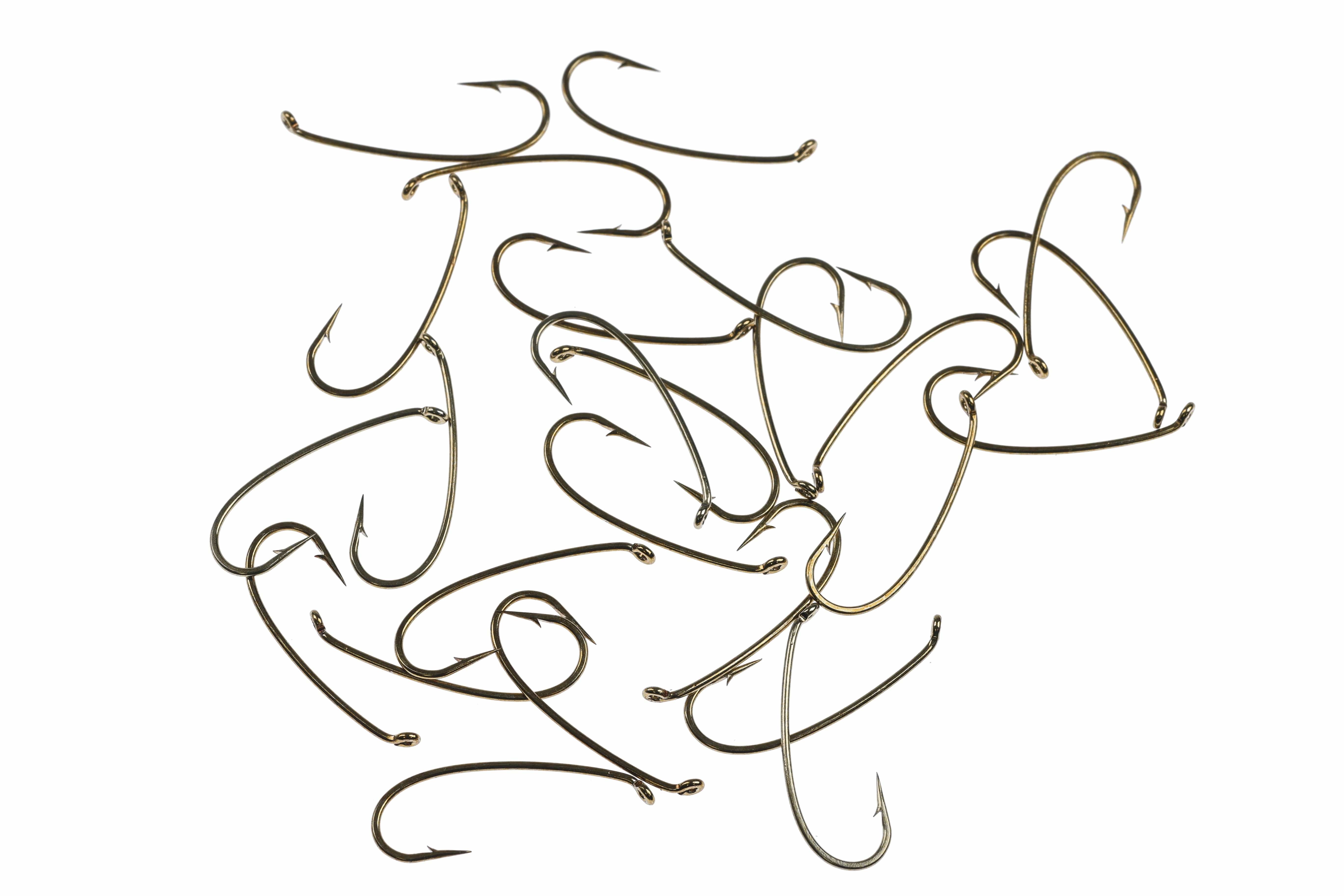
Kelly Galloup's Vertical Eye Streamer Hook is a specialized tool engineered to revolutionize the movement and tracking of large, articulated streamers. By orienting the hook eye vertically rather than horizontally or inline, this design functions similarly to the keel of a ship, ensuring that voluminous patterns track straight and true in heavy currents without rolling onto their sides. It is specifically tailored for the angler chasing predatory brown trout, bass, or muskies, providing a platform that supports bulky materials while maintaining a realistic baitfish profile in the water.
What sets this hook apart is its ability to induce a jigging action without the use of a bent-shank jig hook. When paired with a loop knot, the vertical eye allows the fly to hinge freely up and down, translating rod tip manipulation into immediate vertical dives. This makes it an essential component for tyers creating patterns that need to swim aggressively and dive on the pause, mimicking the erratic behavior of wounded prey in structural cover.
How to Use
To maximize the design features of this hook, it is imperative to attach it to your leader using a non-slip mono loop knot or a similar loop connection. A standard clinch or improved clinch knot will tighten against the vertical eye, locking the fly at a fixed angle and completely negating the intended free-swimming action. This hook is most effective when used as the front hook in an articulated system, where it bears the weight of the head (often cones or dumbbell eyes) and dictates the swimming path of the entire fly.
When tying on this chassis, keep the material distribution balanced along the shank to complement the keel effect of the eye. It is compatible with heavy lead wraps or tungsten beads, which help drive the vertical diving motion. Tyers should secure their articulation wire or monofilament connection firmly to the shank of this hook before attaching the trailing hook, ensuring the two segments move in unison to create a serpentine swimming action.
Why We Like It
We rely on the Vertical Eye Streamer Hook because it fundamentally solves the frustration of large flies "keeling over" or swimming sideways in turbulent water. The unique eye orientation provides a mechanical advantage that keeps the hook point riding correctly, which significantly improves hook-up rates when a fish attacks from below or the side. It eliminates the need for excessive weighting to force a fly to ride straight, allowing for more natural movement.
Furthermore, the heavy-wire construction offers the durability required to wrestle trophy fish out of log jams and undercut banks without fear of the hook straightening out. It allows anglers to fish articulated patterns with a level of precision that standard hooks cannot match, specifically by enabling that trigger-inducing vertical drop the moment tension is released from the line.
Example Flies
The Boogie Man: This pattern utilizes the vertical eye to create a chaotic, wounded motion that triggers reaction strikes from lethargic fish. The hook's orientation allows the heavy deer hair head and marabou body to dip sharply on the pause, simulating a sculpin fleeing to the bottom without fouling on the leader.
Silk Kitty: Designed as a sleek, swimming baitfish imitation, this fly benefits from the vertical eye hook by maintaining a perfectly upright keel even in fast water. The loop knot connection to the vertical eye ensures the long, flowing synthetic fibers undulate naturally without the hook point rolling out of the optimal striking position.
Galloup Vertical Eye vs Standard Streamer Hooks
While standard streamer hooks like the TMC 5263 are versatile staples for wooly buggers and traditional bucktails, they restrict the vertical jigging motion required for modern, oversized articulated flies. The Galloup Vertical Eye differs by offering a connection point that encourages a vertical jigging action rather than a linear glide, making it superior for patterns intended to stall and dive, whereas the standard down-eye hook is better suited for flies that are stripped consistently on a horizontal plane.
Description
Kelly Galloup's Vertical Eye Streamer Hook is a specialized tool engineered to revolutionize the movement and tracking of large, articulated streamers. By orienting the hook eye vertically rather than horizontally or inline, this design functions similarly to the keel of a ship, ensuring that voluminous patterns track straight and true in heavy currents without rolling onto their sides. It is specifically tailored for the angler chasing predatory brown trout, bass, or muskies, providing a platform that supports bulky materials while maintaining a realistic baitfish profile in the water.
What sets this hook apart is its ability to induce a jigging action without the use of a bent-shank jig hook. When paired with a loop knot, the vertical eye allows the fly to hinge freely up and down, translating rod tip manipulation into immediate vertical dives. This makes it an essential component for tyers creating patterns that need to swim aggressively and dive on the pause, mimicking the erratic behavior of wounded prey in structural cover.
How to Use
To maximize the design features of this hook, it is imperative to attach it to your leader using a non-slip mono loop knot or a similar loop connection. A standard clinch or improved clinch knot will tighten against the vertical eye, locking the fly at a fixed angle and completely negating the intended free-swimming action. This hook is most effective when used as the front hook in an articulated system, where it bears the weight of the head (often cones or dumbbell eyes) and dictates the swimming path of the entire fly.
When tying on this chassis, keep the material distribution balanced along the shank to complement the keel effect of the eye. It is compatible with heavy lead wraps or tungsten beads, which help drive the vertical diving motion. Tyers should secure their articulation wire or monofilament connection firmly to the shank of this hook before attaching the trailing hook, ensuring the two segments move in unison to create a serpentine swimming action.
Why We Like It
We rely on the Vertical Eye Streamer Hook because it fundamentally solves the frustration of large flies "keeling over" or swimming sideways in turbulent water. The unique eye orientation provides a mechanical advantage that keeps the hook point riding correctly, which significantly improves hook-up rates when a fish attacks from below or the side. It eliminates the need for excessive weighting to force a fly to ride straight, allowing for more natural movement.
Furthermore, the heavy-wire construction offers the durability required to wrestle trophy fish out of log jams and undercut banks without fear of the hook straightening out. It allows anglers to fish articulated patterns with a level of precision that standard hooks cannot match, specifically by enabling that trigger-inducing vertical drop the moment tension is released from the line.
Example Flies
The Boogie Man: This pattern utilizes the vertical eye to create a chaotic, wounded motion that triggers reaction strikes from lethargic fish. The hook's orientation allows the heavy deer hair head and marabou body to dip sharply on the pause, simulating a sculpin fleeing to the bottom without fouling on the leader.
Silk Kitty: Designed as a sleek, swimming baitfish imitation, this fly benefits from the vertical eye hook by maintaining a perfectly upright keel even in fast water. The loop knot connection to the vertical eye ensures the long, flowing synthetic fibers undulate naturally without the hook point rolling out of the optimal striking position.
Galloup Vertical Eye vs Standard Streamer Hooks
While standard streamer hooks like the TMC 5263 are versatile staples for wooly buggers and traditional bucktails, they restrict the vertical jigging motion required for modern, oversized articulated flies. The Galloup Vertical Eye differs by offering a connection point that encourages a vertical jigging action rather than a linear glide, making it superior for patterns intended to stall and dive, whereas the standard down-eye hook is better suited for flies that are stripped consistently on a horizontal plane.