
Original: $3.49
-65%$3.49
$1.22The Story
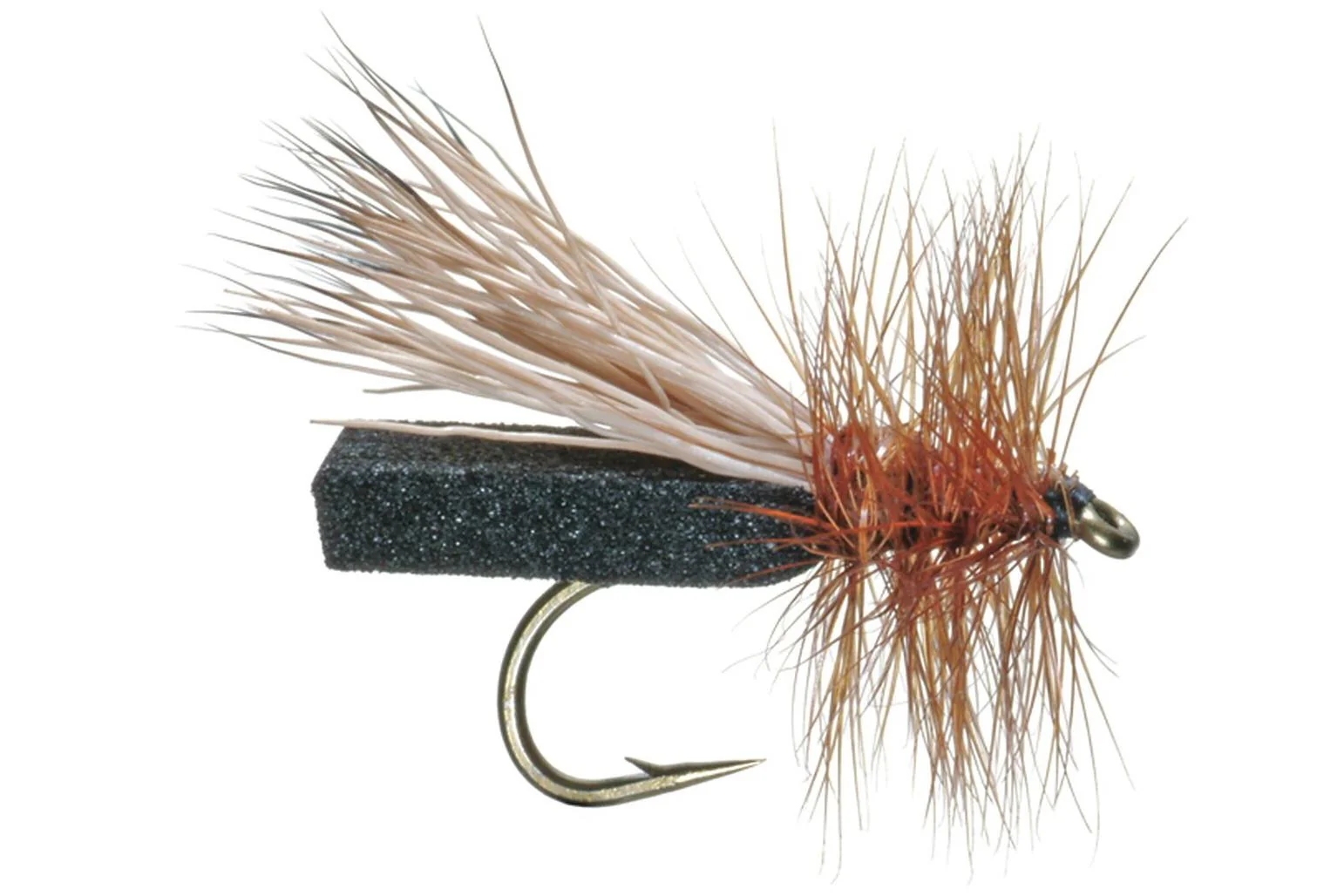
The Big Fat Angie Fly is a bold terrestrial-style attractor that suggests a big, struggling land bug stuck in the surface film, and it has earned a reputation for pulling trout up when they ignore smaller dries. It belongs in your box because it floats with confidence, stays visible in broken water, and still rides low enough to look like real food. Reach for it when you are targeting trout in creeks, tailwaters, and bigger western rivers.
What It Imitates
The Big Fat Angie does not match one exact insect, it suggests several large terrestrials and big meals. With its low-riding posture, splayed rubber legs, and bulky wing, it can pass for large ants, beetles, crickets, cicadas, or even a stonefly that has slipped into the drift. The curved hook helps the back half sit into the film, which sells the look of a heavy bug fighting the surface.
How To Use It
Fish the Big Fat Angie as a dry fly along grassy banks, under overhanging brush, and tight to cutbanks where terrestrials fall in. Dead-drift it through seams and foam lines, then add an occasional small twitch to suggest kicking legs and a bug trying to crawl free. It also shines as the top fly in a dry-dropper rig because the foam and yarn wing provide the lift needed to suspend heavier tungsten bead nymphs without sinking.
Use it to pick apart pocket water, especially when the current is choppy and fish have little time to inspect the fly. In bigger runs, target the soft edges next to faster water, and let it drift into the lane where trout slide up to intercept larger meals. If you are blind-fishing, treat it like a searching pattern and cover water with short, controlled drifts.
When To Use It
The Big Fat Angie is a strong choice in summer and early fall when terrestrials are common on the water, and it also fits right in during periods when trout are looking for large surface food. It holds up well on windy days and in rough currents because it stays afloat and remains easy to track. The fly’s bold silhouette helps trout find it in glare, broken water, and lower light near morning and evening.
Why We Like It
This pattern fixes a common issue with foam terrestrials, it can float like a cork but still sit down in the film like a real insect. The curved hook and low-riding body give it a vulnerable posture that can turn lookers into eaters on pressured water. It is also built for abuse, so you can fish it hard, support a dropper, and keep casting without the fly falling apart.
Comparisons
Big Fat Angie Fly vs Chubby Chernobyl:
The Chubby Chernobyl is a wide, high-floating attractor that rides on top and throws a big footprint. The Big Fat Angie keeps a slimmer look and sits lower in the surface film thanks to the curved hook, which can look more natural when trout are wary of tall foam patterns. Choose the Chubby when you want maximum float and a louder profile, choose the Big Fat Angie when you want a lower-riding terrestrial look that still carries a dropper.
Big Fat Angie Fly vs Stimulator:
The Stimulator is a classic attractor that leans on deer hair, dubbing, and hackle to float and suggest stoneflies or caddis. In rough water it can start to get waterlogged and need more attention to keep riding right, especially after a few fish. The Big Fat Angie uses foam and synthetic yarn for buoyancy and visibility, so it stays up longer with less drying and keeps its shape after repeated drifts.
Big Fat Angie Fly vs Parachute Hopper:
A Parachute Hopper is a more traditional terrestrial that can land softly and look clean on slower water. That lighter build often cannot support heavier nymph droppers for long, and it can be harder to see in riffles. The Big Fat Angie is the better choice when you want more lift for a dry-dropper setup, more durability, and a bigger target in fast or broken water, while the Parachute Hopper fits best when trout demand a gentler, more subtle presentation.

Details & Craftsmanship
Every detail has been carefully considered to bring you the perfect product.

Details & Craftsmanship
Every detail has been carefully considered to bring you the perfect product.

Details & Craftsmanship
Every detail has been carefully considered to bring you the perfect product.

Details & Craftsmanship
Every detail has been carefully considered to bring you the perfect product.
Description
The Big Fat Angie Fly is a bold terrestrial-style attractor that suggests a big, struggling land bug stuck in the surface film, and it has earned a reputation for pulling trout up when they ignore smaller dries. It belongs in your box because it floats with confidence, stays visible in broken water, and still rides low enough to look like real food. Reach for it when you are targeting trout in creeks, tailwaters, and bigger western rivers.
What It Imitates
The Big Fat Angie does not match one exact insect, it suggests several large terrestrials and big meals. With its low-riding posture, splayed rubber legs, and bulky wing, it can pass for large ants, beetles, crickets, cicadas, or even a stonefly that has slipped into the drift. The curved hook helps the back half sit into the film, which sells the look of a heavy bug fighting the surface.
How To Use It
Fish the Big Fat Angie as a dry fly along grassy banks, under overhanging brush, and tight to cutbanks where terrestrials fall in. Dead-drift it through seams and foam lines, then add an occasional small twitch to suggest kicking legs and a bug trying to crawl free. It also shines as the top fly in a dry-dropper rig because the foam and yarn wing provide the lift needed to suspend heavier tungsten bead nymphs without sinking.
Use it to pick apart pocket water, especially when the current is choppy and fish have little time to inspect the fly. In bigger runs, target the soft edges next to faster water, and let it drift into the lane where trout slide up to intercept larger meals. If you are blind-fishing, treat it like a searching pattern and cover water with short, controlled drifts.
When To Use It
The Big Fat Angie is a strong choice in summer and early fall when terrestrials are common on the water, and it also fits right in during periods when trout are looking for large surface food. It holds up well on windy days and in rough currents because it stays afloat and remains easy to track. The fly’s bold silhouette helps trout find it in glare, broken water, and lower light near morning and evening.
Why We Like It
This pattern fixes a common issue with foam terrestrials, it can float like a cork but still sit down in the film like a real insect. The curved hook and low-riding body give it a vulnerable posture that can turn lookers into eaters on pressured water. It is also built for abuse, so you can fish it hard, support a dropper, and keep casting without the fly falling apart.
Comparisons
Big Fat Angie Fly vs Chubby Chernobyl:
The Chubby Chernobyl is a wide, high-floating attractor that rides on top and throws a big footprint. The Big Fat Angie keeps a slimmer look and sits lower in the surface film thanks to the curved hook, which can look more natural when trout are wary of tall foam patterns. Choose the Chubby when you want maximum float and a louder profile, choose the Big Fat Angie when you want a lower-riding terrestrial look that still carries a dropper.
Big Fat Angie Fly vs Stimulator:
The Stimulator is a classic attractor that leans on deer hair, dubbing, and hackle to float and suggest stoneflies or caddis. In rough water it can start to get waterlogged and need more attention to keep riding right, especially after a few fish. The Big Fat Angie uses foam and synthetic yarn for buoyancy and visibility, so it stays up longer with less drying and keeps its shape after repeated drifts.
Big Fat Angie Fly vs Parachute Hopper:
A Parachute Hopper is a more traditional terrestrial that can land softly and look clean on slower water. That lighter build often cannot support heavier nymph droppers for long, and it can be harder to see in riffles. The Big Fat Angie is the better choice when you want more lift for a dry-dropper setup, more durability, and a bigger target in fast or broken water, while the Parachute Hopper fits best when trout demand a gentler, more subtle presentation.